
Most women who carry a stun gun do it because something happened — a parking garage that felt wrong, a walk to the car after a late shift, a neighborhood that used to feel safe. The decision isn’t really about fear; it’s about not wanting to be caught off guard a second time. A stun gun that’s too bulky or complicated gets left in the bag — which means it’s useless when it matters. The options below are built to be carried daily, deployed fast, and sized for the way women actually move through the world.


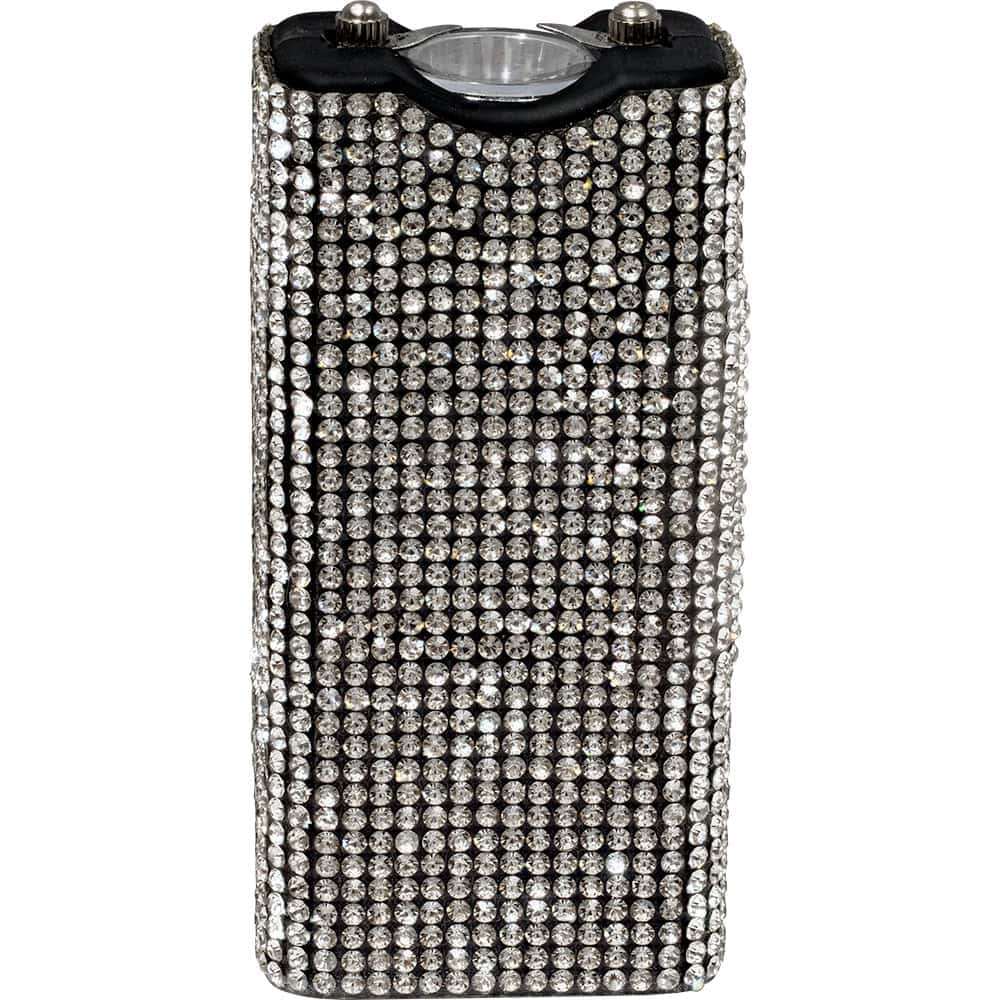

Size and carry method. The single biggest reason a stun gun fails is that it’s sitting at the bottom of a bag when something goes wrong. For daily carry, compact wins — something that clips to a keychain, slides into a jacket pocket, or disappears in a purse without adding bulk. The Runt is a good benchmark: keychain-sized, rechargeable, and still delivers 80 million volts. If you carry a bag every day, that’s your carry method. If you walk to your car alone at night, a keychain clip is faster to access.
Voltage and amperage both matter. Voltage is what gets the attention — the arc, the sound, the deterrent factor. Amperage is what actually affects the body. When comparing stun guns, look for both numbers. Models like the SAL and MultiGuard push 4.8–4.9 milliamps alongside their voltage, which puts them in a different category than lower-amperage budget units. This isn’t about chasing specs — it’s about understanding that a higher-amperage unit tends to be more effective on contact, regardless of what the voltage number says on the box.
Disable pin wrist strap. This feature doesn’t get enough attention. A disable pin strap means that if the stun gun is grabbed and pulled away from you, it deactivates — it can’t be used against you. The Runt includes one. If you’re choosing between two similar models and one has a disable pin and the other doesn’t, choose the one with the pin.
Built-in alarm. A stun gun that also sounds a 120dB alarm gives you two options in one device. You can trigger the alarm to draw attention without making contact — useful in crowds, parking structures, or situations where the threat hasn’t escalated to physical contact yet. The MultiGuard and SAL both carry this combination.
Disguised vs. visible design. There’s a real argument for both. A visible stun gun in hand is a deterrent — most attackers will back off before contact. A disguised unit like the Lipstick Stun Gun offers an element of surprise and doesn’t signal that you’re carrying anything. Which approach fits your situation depends on where and how you move through the world.
A stun gun works on contact — the electrodes need to touch the attacker’s body, ideally on the torso, neck, or upper arm. Clothing reduces effectiveness slightly, which is why models like the Spike are designed with protruding electrodes to penetrate layers — but even standard electrodes work through most light clothing. The key point: proximity is required. This isn’t a distance weapon, which means your carry method has to get it into your hand fast.
Keep it accessible. If you carry a bag, the stun gun should be in an outer pocket or attached to the bag’s exterior — not buried under your wallet and keys. On a keychain is ideal because your keys are almost always in your hand when you’re moving between locations. The moment you start fishing for something in a bag is the moment you’re most vulnerable.
Test the arc regularly. Most rechargeable stun guns allow you to test them without discharging into a person — a quick one-second trigger pull shows you the arc and confirms the battery is charged. Do this once a week. A dead battery on a stun gun is the same as not carrying one.
Know your state’s laws before you carry. Stun guns are legal for civilian carry in most U.S. states but restrictions vary — some states require permits, others prohibit carry in specific locations, and a handful have broader restrictions. Check our Laws and Restrictions page at https://varietyproducts.com/law-and-restrictions/ before purchasing.
A: Stun guns are contact weapons — the electrodes need to physically touch the attacker’s body to be effective. Most standard models require you to be within arm’s reach, which is why carry method and quick access matter so much. Unlike a TASER, a stun gun doesn’t fire probes at a distance, so it’s best used as a last-resort close-contact defense after other options have been exhausted or aren’t available.
A: Stun gun laws vary significantly by state and sometimes by city or county. Most U.S. states allow civilian ownership and carry with no permit required, but some states have restrictions on voltage, carry locations, or require a concealed carry permit. A few states have broader prohibitions. Before purchasing, check the laws for your specific location at our Laws and Restrictions page at https://varietyproducts.com/law-and-restrictions/ — this page is updated regularly and covers state-by-state rules.
A: The fastest access point is wherever your hand already goes in a high-stress moment. For most women, that’s a jacket pocket or an exterior bag pocket — not buried in a purse. Keychain-sized models like the Runt attach directly to your keys, which means the stun gun is in your hand any time your keys are. If you carry a shoulder bag, clip the stun gun to an exterior zipper pull or keep it in a dedicated outer pocket you can reach without looking.
A: Both are solid non-lethal options and many women carry both. Pepper spray has range — typically 8 to 15 feet depending on the formula — which means you can respond before physical contact occurs. A stun gun requires contact but isn’t affected by wind, and there’s no risk of blowback affecting you in tight spaces. Pepper spray is generally faster to deploy with less fine motor coordination required under stress. A stun gun requires you to be close enough to make contact, which is a higher-stakes situation. If you can only carry one and spend time outdoors or in open environments, pepper spray often edges out a stun gun for range advantage.
A: The disable pin is a small plug on a wrist strap that connects to the stun gun’s activation circuit. When you wear the strap and the pin is inserted, the stun gun functions normally. If someone grabs the stun gun and yanks it away from you, the pin pulls out and the device deactivates — it cannot be fired against you. It’s a straightforward safety feature that addresses the real concern of a weapon being taken and turned on its owner, and it’s worth prioritizing when choosing between similar models.
If you're weighing options or have questions about what works best for your situation, we're happy to help — reach out through our contact page and we'll point you in the right direction.
Shop All Stun GunsEXCLUSIVE OFFER
Every order – not just your first!
Unlock Your Discount Instantly
Enter your email below and your personal 15% discount code appears right here – no need to check your inbox.
🔒 We respect your privacy. Unsubscribe anytime.
YOU’RE IN!
Use this code on every order
🎉
Here’s Your Code!
Use it now an on every future order.
YOUR DISCOUNT CODE
We also sent this code to your email for safekeeping.