
You’re a mile and a half from your car, headphones in, when a dog comes off a porch at full sprint — or someone follows you onto a trail who shouldn’t be there. It happens faster than you’d think, and your options in that moment come down to what you’re already carrying. Runners have a real access problem with self-defense: most sprays are designed for a purse or a glove box, not for someone who’s moving, sweating, and needs both hands free. The right pepper spray for running isn’t just about formula strength — it’s about carry method, one-handed deployment, and whether you’ll actually have it on your body when something goes wrong. Here’s what’s worth carrying.



Carry method comes first. A spray buried in a running vest pocket is almost useless — by the time you stop, dig it out, and get the safety off, the moment has passed. Look for options with a belt clip, quick-release keychain, or a design that fits in a running armband holster. The Pepper Shot and Wildfire keychain models clip directly to a waistband or hydration belt and detach with one pull. That’s what you actually want when you’re mid-stride and something goes wrong.
Size and weight matter on the road. Runners don’t want to carry anything they don’t have to, so compact 1/2 oz units are the practical choice for most routes. They’re light enough that you forget they’re there — which is exactly when you want them. The 0.63 oz Mace models give you more capacity and more range without adding much bulk, which is worth considering if you’re doing longer distances or trail runs where encounters are less predictable.
Stream pattern is the right call for outdoor use. Foggers and gel formulas both have their place, but for outdoor running, a stream gives you directional control in wind without saturating the air around you. Every spray in this selection uses a stream pattern for that reason. At 6 to 12 feet of effective range, you have room to deploy before physical contact becomes unavoidable.
Formula strength is real, but it’s not the whole story. Major capsaicinoids (MC%) is the actual measure of pepper spray effectiveness — not Scoville Heat Units alone. The Wildfire formula at 1.4% MC is at the higher end of what’s commercially available. The Pepper Shot and Mace formulas at 1.2% MC are still maximum strength by most standards. Either will work. The difference in outcome usually comes down to whether you can actually access the spray under stress, not which brand you chose.
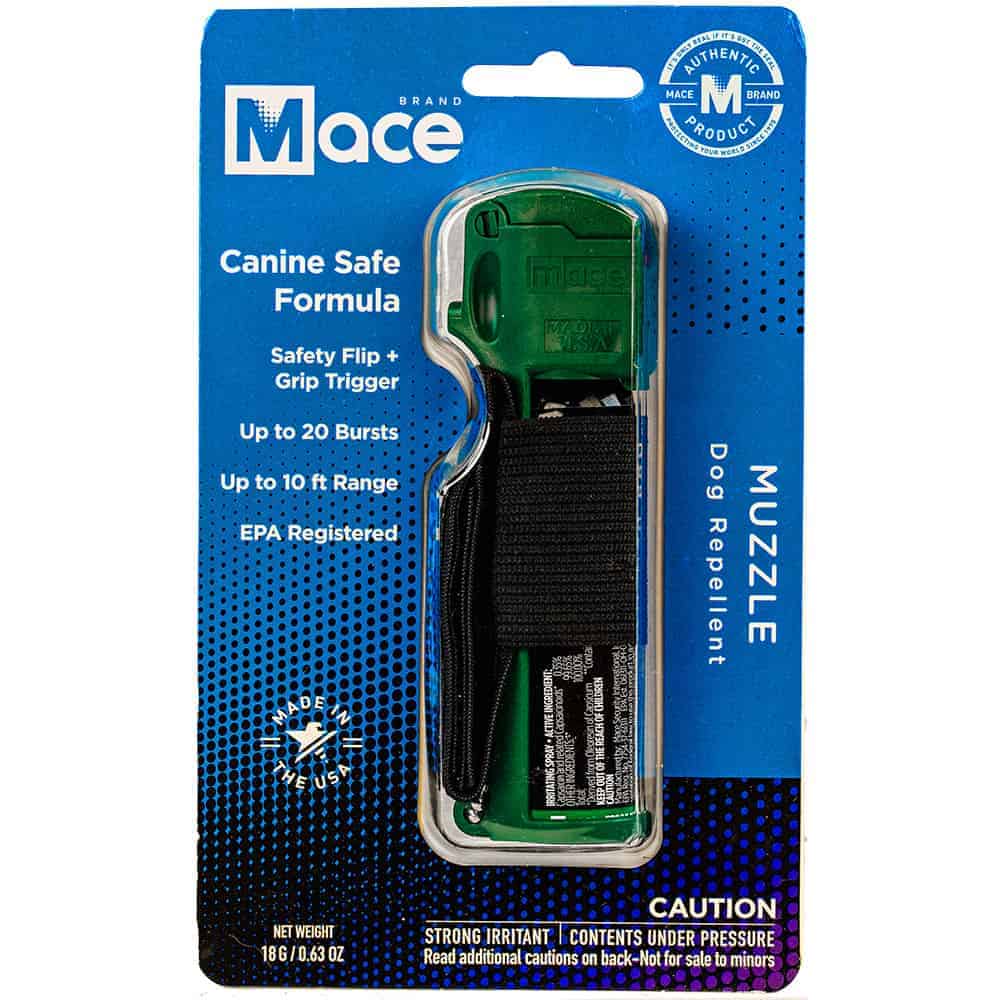
Dog-specific spray is worth carrying if your route has a dog problem. The Mace Canine Repellent uses an EPA-registered formula designed to stop dog attacks without causing permanent injury to the animal — which matters both legally and practically. If you’re running through neighborhoods with unsecured dogs or on trails where encounters are common, this is a more appropriate tool than a standard personal spray.
Position it for your dominant hand. Clip or attach your spray on the side of your body that corresponds to your dominant hand so you’re not fumbling across your body to grab it. Practice the motion — clip, grab, thumb the safety — until it’s automatic. You’re not going to think clearly during an adrenaline surge, so muscle memory is what you’re actually training for.
Run with it accessible, not stored. There’s a difference between having pepper spray in your running bag and having pepper spray you can actually use. For most runners, that means a belt clip or a running-specific holster that keeps the spray on the outside of your body, oriented correctly, with the safety you can flip with one thumb. The quick-release keychain design on the Pepper Shot and Wildfire models works well clipped to a hydration pack strap or waistband.
Know the range before you need it. The sprays here range from 6 to 12 feet of effective distance. That sounds like a lot until you realize a charging dog closes that distance in about a second. Your instinct will be to wait until something is right on top of you — resist that. Deploy at the far end of the range, especially for dog encounters, and move laterally while you do it. Spray and move, don’t spray and stand.
Check your local laws before you carry. Pepper spray is legal to carry in most states for adults 18 and older, but some jurisdictions have restrictions on formula strength, container size, or who can carry. See our Laws and Restrictions page at https://varietyproducts.com/law-and-restrictions/ for a breakdown by state before you head out.
A: The most practical carry method for runners is a belt clip or quick-release keychain that attaches to a waistband, hydration belt strap, or running shorts waistband. The goal is to keep the spray on the outside of your body, oriented so you can grab it with your dominant hand without breaking stride. Options like the Pepper Shot and Wildfire 1/2 oz keychain sprays are designed exactly for this kind of carry — compact enough to forget they’re there, accessible enough to actually use.
A: Pepper spray is legal for adults 18 and older in most U.S. states, but some states have restrictions on formula strength, canister size, or age of purchase. A few states require a firearms ID card or have other specific conditions. Before you start carrying, check our Laws and Restrictions page at https://varietyproducts.com/law-and-restrictions/ for a state-by-state breakdown of what’s allowed where you run.
A: It depends on your route. If your primary concern is human threats, a personal spray like the Wildfire or Pepper Shot keychain models is the right choice — they’re formulated for that use and carry easily. If you regularly run through areas with loose or aggressive dogs, the Mace Canine Repellent is worth carrying instead or in addition. It’s EPA-registered specifically for dog deterrence and uses a formula designed to stop an attack without causing permanent harm to the animal, which matters both legally and ethically.
A: Stream pattern sprays are the best choice for outdoor running because they give you directional control rather than creating a fog that can blow back into your face. All four sprays on this page use a stream delivery pattern. When you deploy, try to position yourself so the wind is at your back or to your side, and aim for the attacker’s face at the far end of the effective range — 6 to 12 feet depending on the model. Move laterally as you spray rather than standing still.
A: Personal alarms and pepper spray serve different purposes and honestly work better together than either does alone. A personal alarm draws attention and may deter a threat before it escalates — it’s passive and requires no aim under stress. Pepper spray is an active deterrent that stops a threat already in motion, whether human or canine. The problem with relying on an alarm alone is that in remote areas or early morning runs, there may be no one close enough to hear it. Pepper spray works regardless of who’s nearby.
We've been in the self-defense business for nearly 40 years and we're happy to help you find the right carry option for your specific route and situation — reach out to us here and we'll point you in the right direction.
Shop All Pepper SpraysEXCLUSIVE OFFER
Every order – not just your first!
Unlock Your Discount Instantly
Enter your email below and your personal 15% discount code appears right here – no need to check your inbox.
🔒 We respect your privacy. Unsubscribe anytime.
YOU’RE IN!
Use this code on every order
🎉
Here’s Your Code!
Use it now an on every future order.
YOUR DISCOUNT CODE
We also sent this code to your email for safekeeping.