
You’re two miles from the trailhead when a dog charges out of the brush, or you round a switchback and find yourself closer to a black bear than anyone wants to be—and the question isn’t whether something could happen out there, it’s whether you’re ready when it does. Most hikers and campers aren’t thinking about self-defense when they pack; they’re thinking about water, snacks, and whether the weather holds. But the people who’ve actually had a close encounter on the trail will tell you the same thing: you want something on your hip before you need it, not in the bottom of your pack when it’s already too late. Here’s what’s worth carrying.
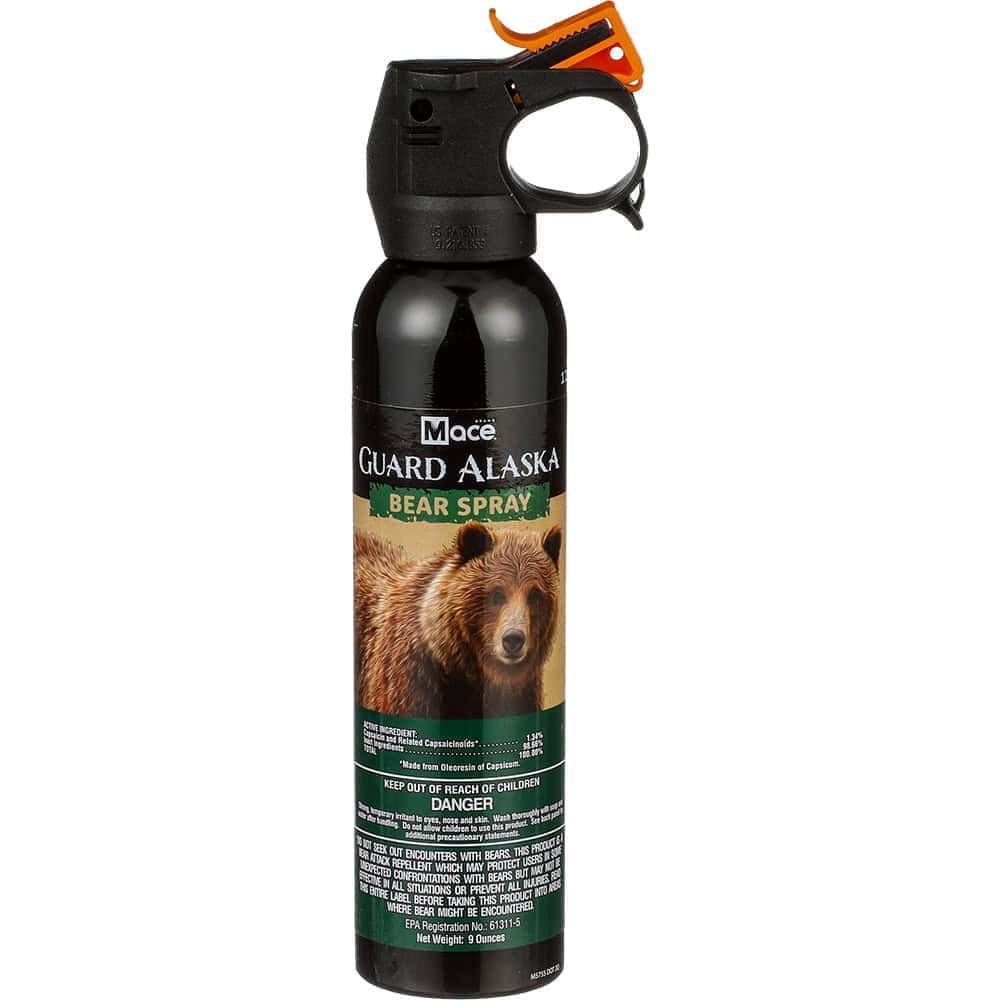
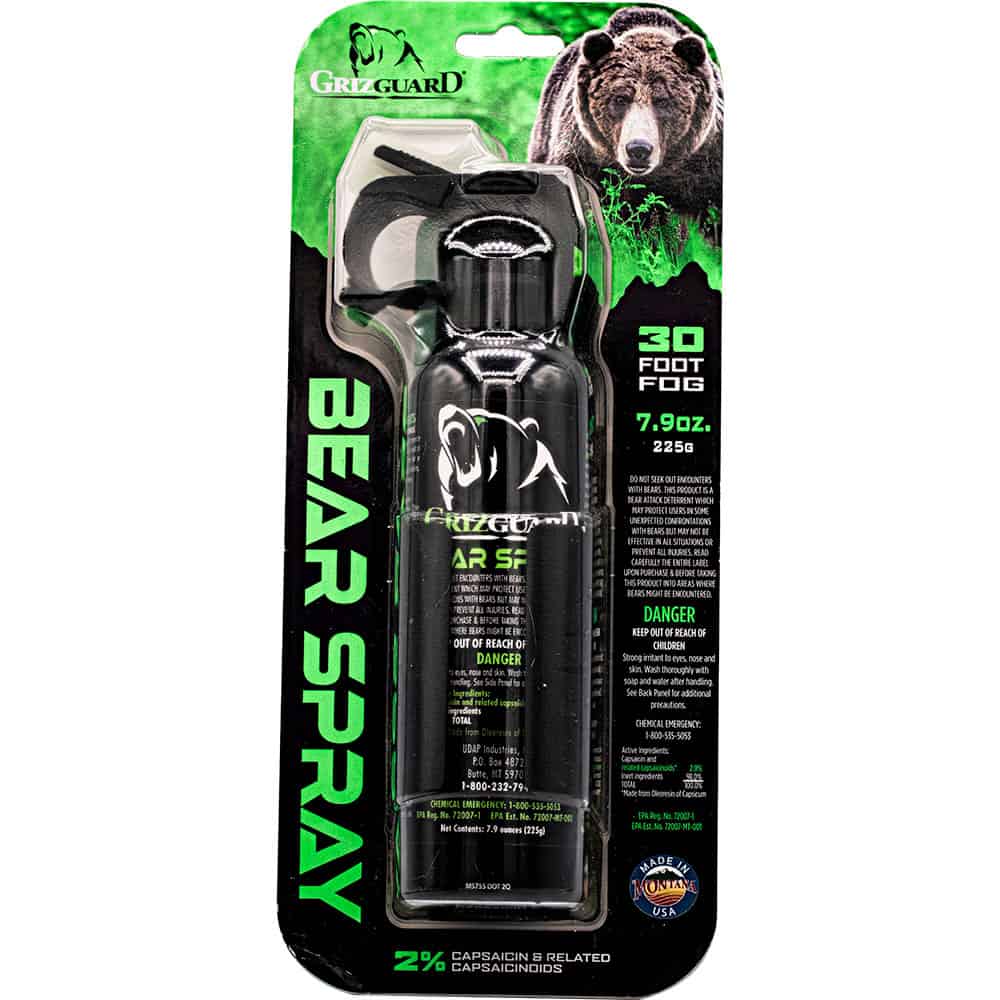
Range matters more on the trail than it does in a parking lot. When a bear is closing ground at 30 feet, you don’t want a keychain spray rated for 8 feet. Bear-specific sprays like the Guard Alaska Bear Spray and GrizGuard Bear Spray are built with that gap in mind—fogger patterns that create a wide barrier rather than a narrow stream, with ranges of 20 to 30 feet so you can deploy before the animal reaches you.
Know the difference between bear spray and human-defense spray. They look similar, but they’re not interchangeable. Bear sprays use an EPA-registered formula calibrated specifically for deterring large wildlife—the concentration, dispersal pattern, and volume are all different from a standard OC spray. Using a small keychain spray on a charging bear is not a plan. Carrying bear spray in a national park where human-defense spray is restricted is also a problem. The right tool depends on where you’re going and what threats are realistic for that terrain.
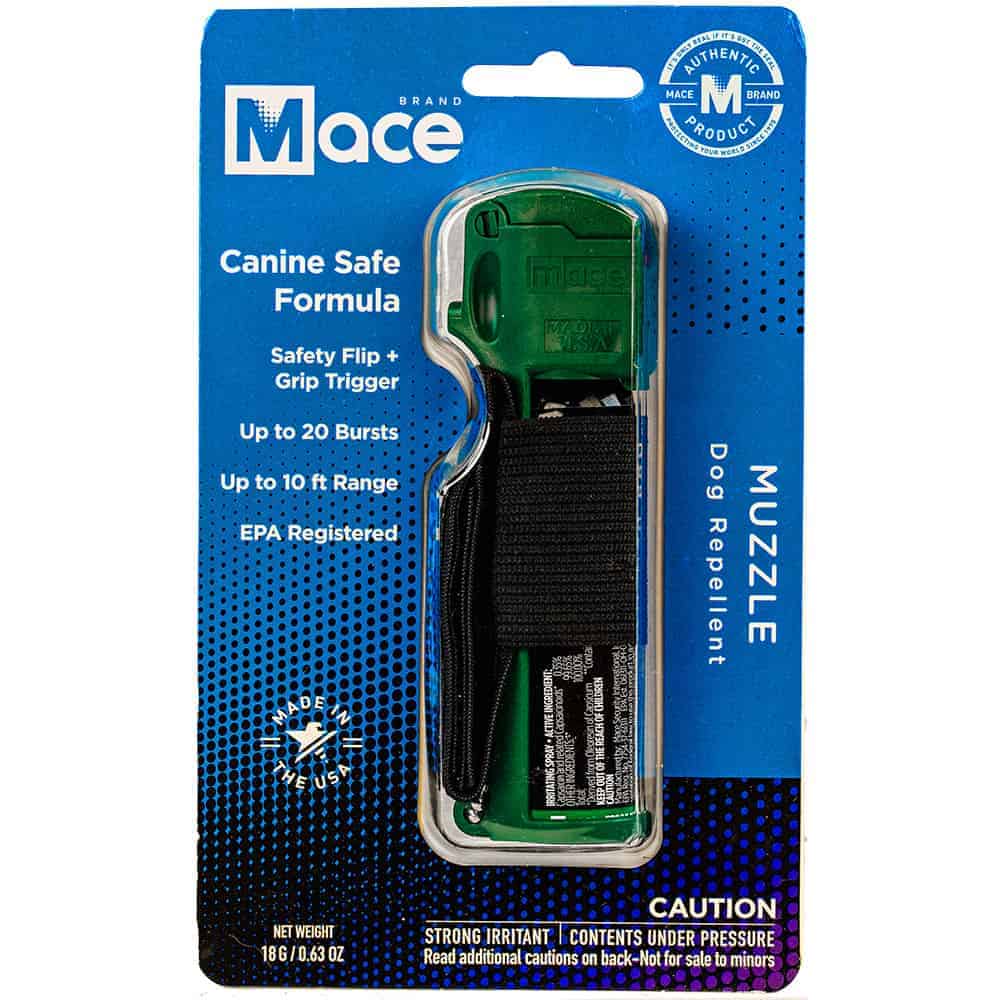
Canine encounters are more common than bear encounters for most hikers. If you’re day-hiking in areas with loose or aggressive dogs, a purpose-built canine repellent like the Mace Canine Repellent Spray is a smarter choice than bear spray. It’s EPA-registered for dog deterrence, compact enough to carry without adding real weight, and far easier to deploy on a dog charging from 10 feet away.
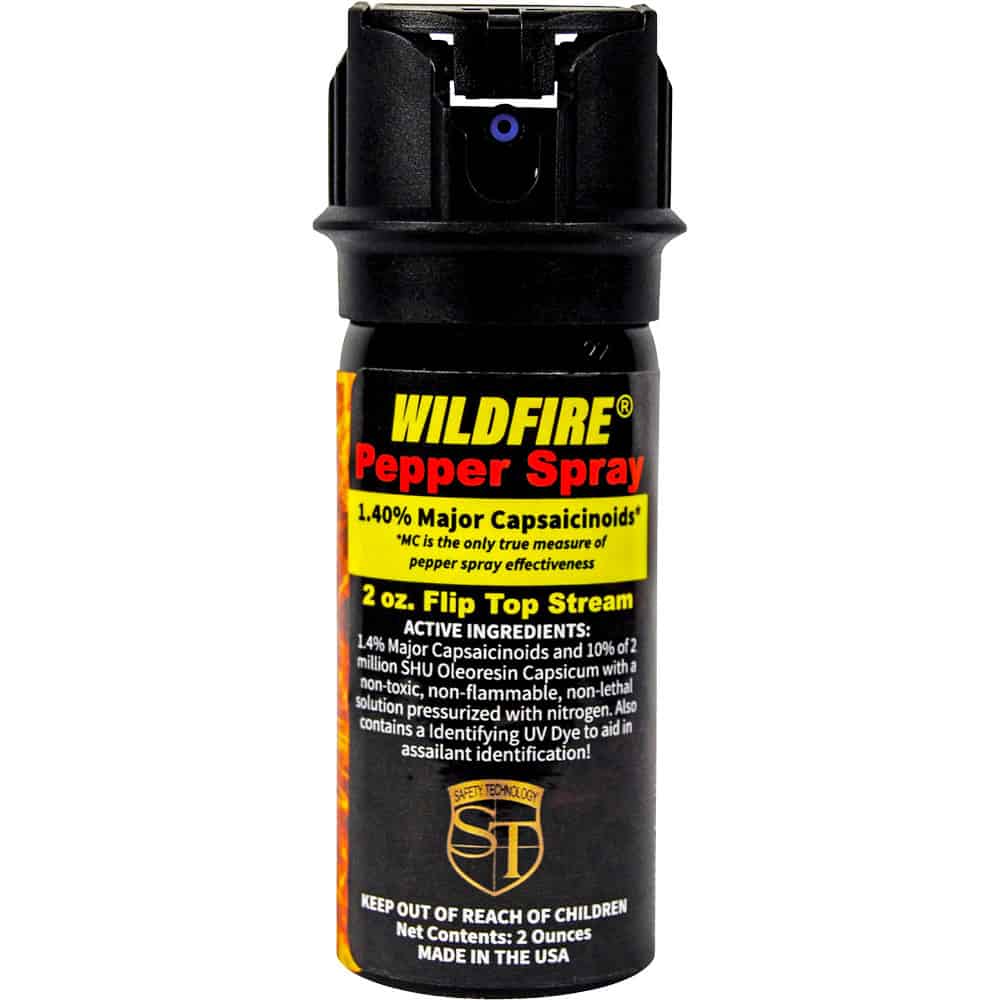
Stream vs. fogger patterns have real tradeoffs in wind. Foggers create a wider cloud and are harder for a target to avoid, but wind can push that cloud back toward you. Stream patterns like the Wildfire Pepper Spray Stream give you more directional control and reduce blowback risk in open or breezy conditions. If you’re camping at exposed elevations or in consistently windy terrain, a stream pattern is worth considering even against human threats.
Carry position is everything. A spray buried in the bottom of your pack is useless. If you’re in bear country, the standard guidance is hip holster—accessible with one hand, unobstructed by pack straps. The GrizGuard comes with a hip holster for exactly this reason. For dog encounters on lower-traffic trails, a belt clip or accessible exterior pocket works. The point is that you need to be able to deploy in seconds, not minutes.
For bear spray, the holster is non-negotiable. Both the Guard Alaska Bear Spray and GrizGuard Bear Spray are sized for hip holster carry—large canisters that won’t fit in a pocket or clip to a keychain. Wear the holster on your dominant-hand side, positioned so you can draw without removing your pack. Practice the motion at home before you hit the trail. It sounds obvious, but people freeze when an encounter happens fast.
For canine repellent and personal OC sprays, clip or pocket carry works. The Mace Canine Repellent Spray and Wildfire Pepper Spray Stream are compact enough to clip to a belt loop, a pack strap, or ride in an accessible hip belt pocket. The key is consistent placement—same spot every time, so you’re not thinking about where it is when you need it. Quick-release clips help here.
Wind direction matters before you spray. Outdoors, always try to position yourself upwind of the threat before deploying. With a fogger pattern, even a light breeze at the wrong angle can get OC in your own face. With stream patterns, you have more control, but aim is more critical. In a real encounter, you may not have the luxury of perfect positioning—which is why knowing your spray’s behavior before you’re in the field matters.
After the trip, inspect and store properly. OC spray and bear spray both have expiration dates—typically 2 to 4 years. Heat degrades propellant pressure, so don’t leave canisters in a hot car or tent baking in the sun. Store at room temperature when not in use, check the safety mechanism before every trip, and replace any spray that’s expired or shows signs of pressure loss.
A: It depends on the specific park and the type of spray. Many national parks allow EPA-registered bear spray on trails but restrict or prohibit standard human-defense pepper spray—and some parks have rules about where bear spray can be stored at camp. State and local laws also vary significantly. Before any trip, check the regulations for your specific destination. For a general overview of how laws vary by state and use case, see our Laws & Restrictions page at https://varietyproducts.com/law-and-restrictions/.
A: Bear spray is a specialized EPA-registered formulation designed specifically to deter bears and other large wildlife. It typically comes in larger canisters—the Guard Alaska Bear Spray is 9oz and the GrizGuard is 7.9oz—with fogger dispersal patterns and ranges of 20 to 30 feet, giving you a wide barrier before an animal reaches you. Standard human-defense pepper sprays use similar OC chemistry but are packaged in smaller volumes with stream patterns optimized for close-range human threats. They are not equivalent for bear deterrence and should not be used interchangeably in the field.
A: Depends entirely on where you’re hiking and what threats are realistic. If you’re in bear country—national parks, remote wilderness, backcountry camping—bear spray is the appropriate tool. If you’re on developed trails, greenways, or suburban parks where aggressive dogs are the more likely encounter, canine-specific repellent like the Mace Canine Repellent Spray is purpose-built for that situation. Some hikers in mixed environments carry both. The honest answer is that most day hikers face far more dog encounters than bear encounters, so the terrain and your realistic threat profile should drive the decision.
A: Bear spray needs to be on a hip holster on your dominant-hand side—the canisters are too large for pockets and too important to bury in your pack. The GrizGuard Bear Spray includes a hip holster for this reason. For smaller personal sprays like the Wildfire Pepper Spray Stream or Mace Canine Repellent, a belt clip, pack hip belt pocket, or shoulder strap attachment keeps them reachable without removing your pack. Wherever you put it, use the same spot every single trip so retrieval is muscle memory, not a search.
A: Yes to both. Most OC sprays and bear sprays have expiration dates of 2 to 4 years from manufacture—after that, propellant pressure can drop enough to reduce range and effectiveness significantly. Heat accelerates this process, so leaving a canister in a hot tent, baking in the summer sun, or stored long-term in a vehicle is a real problem. Check the expiration date before every season, store sprays at room temperature when not in use, and test the safety clip mechanism before each trip. A spray you can’t trust is just extra weight.
Whether you're heading into bear country or just want reliable trail protection, we can help you find the right option—reach out through our contact page and we'll point you in the right direction.
Shop All Pepper SpraysEXCLUSIVE OFFER
Every order – not just your first!
Unlock Your Discount Instantly
Enter your email below and your personal 15% discount code appears right here – no need to check your inbox.
🔒 We respect your privacy. Unsubscribe anytime.
YOU’RE IN!
Use this code on every order
🎉
Here’s Your Code!
Use it now an on every future order.
YOUR DISCOUNT CODE
We also sent this code to your email for safekeeping.