
You’ve checked in, dead-bolted the door, and pulled the chain — but that chain isn’t rated for much, and the person at the front desk just handed a key card to anyone who asked which room you were in. Travelers are a specific kind of vulnerable: you’re in an unfamiliar place, your routine is off, and you’re often alone in a room that dozens of strangers have access to. A personal alarm doesn’t replace good judgment, but it gives you a loud, immediate response option when the door opens at 2 a.m. and it shouldn’t be. Here’s what’s worth carrying.



Volume that actually carries. In a hotel corridor with HVAC running and walls built for noise isolation, a 90dB alarm is barely enough. Look for 120dB or higher — that’s roughly the volume of a jet engine at 100 feet. The Keychain Personal Alarm 130dB hits that threshold and then some. Sound at that level doesn’t just alert you; it alerts everyone on the floor, which is exactly the point.
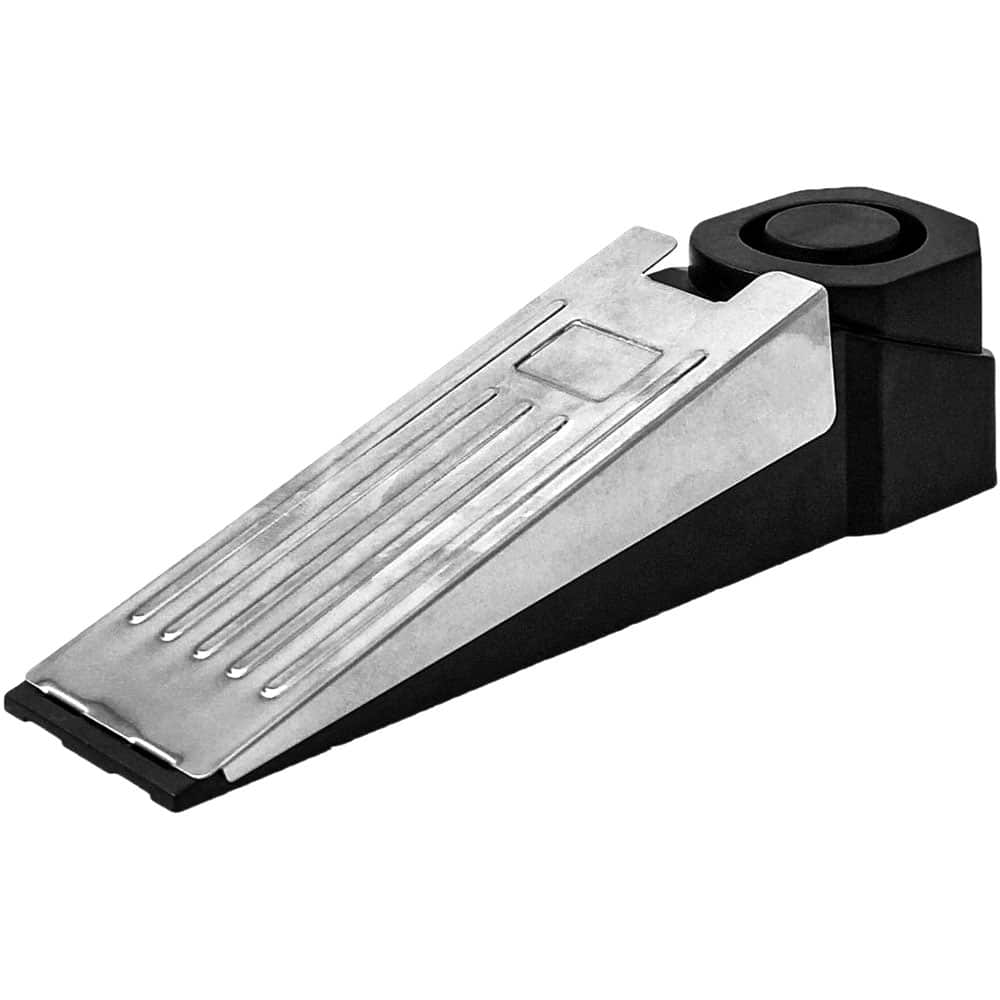
Door security, not just personal panic. Most travelers think of personal alarms as something you carry on your body. That’s valid, but your bigger vulnerability while traveling is usually the door to your room — not a street encounter. The Portable Door Guard Alarm and the Door Stop Alarm both address that gap directly. They’re designed to alert you when a door is opened or forced, which is a fundamentally different threat than being grabbed on a sidewalk.
No installation, no damage deposit issues. This matters more than people realize until they’re standing in a hotel room wondering if they can screw anything into the doorframe. Every product on this page is zero-install. You put it in place, you pick it up when you check out, and the hotel never knows it was there.
Dual function is worth the weight savings. The 2-in-1 Personal and Burglar Alarm earns its place in a carry-on because it replaces two separate devices. Use it as a door alarm at night, detach and carry it as a personal panic alarm during the day. If you’re trying to keep your travel kit light, dual-function gear is how you do it without sacrificing coverage.
Battery type and reliability. Rechargeable devices are convenient at home. On the road, a device that needs a USB port to stay charged is one dead battery away from being useless. Battery-powered alarms with standard cells are more reliable for travel — you can replace them anywhere in the world. Check what your device uses before you pack it.
The door stop alarm is the most underused piece of travel security gear out there, and it’s also one of the simplest to deploy. When you get to your room, lock the deadbolt, engage the chain if there is one, and wedge the door stop alarm against the base of the door before you go to sleep. Even if someone has a key card — whether it’s a malfunctioning duplicate or something more deliberate — the wedge creates physical resistance and the alarm fires the moment there’s pressure on the door. That combination buys you time to respond.
For the personal alarm, keep it clipped somewhere you can reach without thinking — bag strap, belt loop, or in a jacket pocket. Pull-pin designs like the Keychain Personal Alarm 130dB are faster to deploy under stress than push-button designs because there’s no button to find and press. In a genuine emergency, fine motor skills degrade fast. The pull-pin mechanism accounts for that.
If you’re staying in a hostel, a shared rental, or anywhere with a common-area door rather than a private room entrance, the 2-in-1 alarm gives you flexibility. Set it on your room door at night, carry it on your person during the day. Don’t leave it sitting unused in your bag — its value is entirely in it being ready.
One more thing worth saying: these devices are deterrents and alerting tools, not physical defense. If someone is determined and you’re cornered, a loud alarm is going to draw attention and potentially give you a chance to escape — but it’s not going to stop anyone the way a physical confrontation tool might. Know what you’re carrying and what it’s for.
A: Yes, battery-powered personal alarms are generally permitted in carry-on luggage by the TSA. There are no restrictions on the alarm devices themselves — they’re not considered weapons or hazardous materials. The batteries inside (standard AA, AAA, or coin cell) are also permitted in carry-on bags without issue. If you have any doubt about a specific device, the TSA website’s ‘What Can I Bring’ tool is the fastest way to verify before you pack.
A: Personal alarms are legal in virtually every country because they’re non-weapons — they emit sound, nothing more. That said, laws vary widely when it comes to self-defense products in general, and what’s legal to carry on your person can differ from what’s legal to import. We recommend checking the laws for any country you’re visiting before you travel. You can also review our Laws and Restrictions page at https://varietyproducts.com/law-and-restrictions/ for a starting point on what’s permitted in different U.S. jurisdictions.
A: A door stop alarm like the Door Stop Alarm 120dB works in two ways simultaneously: the wedge shape creates physical friction against the floor that resists the door being pushed open, and a pressure sensor triggers the 120dB siren when that friction point is activated. So if someone uses a key card to unlock the door and begins to push it open, both responses happen at the same time — the door is harder to open and the alarm fires immediately. It won’t prevent someone from entering given enough force, but it significantly slows them down and creates immediate noise. In a hotel corridor at 2 a.m., that’s usually enough to cause someone to leave.
A: They solve different problems, which is why the 2-in-1 Personal and Burglar Alarm is worth considering for travel. A door alarm protects you while you’re stationary — sleeping in your room, working in your space. A personal alarm protects you while you’re moving — walking to your car at night, navigating an unfamiliar transit system, exploring a new city alone. If you only want to carry one device, the 2-in-1 gives you both functions in a single unit. If your primary concern is hotel room security specifically, start with the Portable Door Guard Alarm or the Door Stop Alarm and add a keychain alarm for when you’re out.
A: At 120dB, you’re looking at a sound level comparable to a thunderclap or a chainsaw at close range — it is not subtle. In an enclosed hotel room, a 120dB alarm is going to wake you from deep sleep, it’s going to wake people in adjacent rooms, and in a quiet corridor it will carry a significant distance. The devices on this page range from 98dB to 130dB. All of them will wake you. The higher the number, the faster and more reliably they do it, which matters when the difference between 90dB and 130dB is the difference between a sharp sound and something that physically startles you awake.
If you're trying to figure out whether a door alarm, a personal panic alarm, or a combination device makes more sense for how you travel, we're happy to help you think it through — reach out through our contact page and we'll point you in the right direction.
Shop All Personal AlarmsEXCLUSIVE OFFER
Every order – not just your first!
Unlock Your Discount Instantly
Enter your email below and your personal 15% discount code appears right here – no need to check your inbox.
🔒 We respect your privacy. Unsubscribe anytime.
YOU’RE IN!
Use this code on every order
🎉
Here’s Your Code!
Use it now an on every future order.
YOUR DISCOUNT CODE
We also sent this code to your email for safekeeping.