
After checking a box, click the apply button below.
Personal alarms are the simplest non-lethal safety tool you can carry — no training, no permits, no hesitation required. Pull the pin or press the button and you get an ear-splitting 120–130dB siren that cuts through noise and draws immediate attention from anyone nearby.
Whether you’re looking for a keychain model for daily carry, a discreet lipstick-style alarm, or a dual-function device that doubles as a door alarm, every personal alarm in this lineup is battery-powered, compact, and built to activate instantly when you need it most.
Showing all 8 results

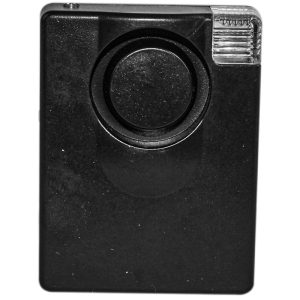

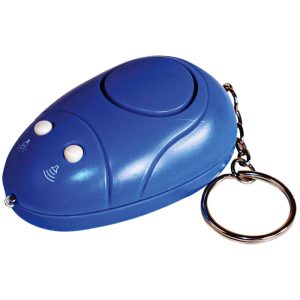


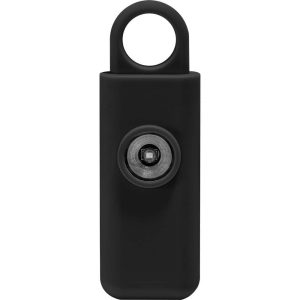
Keychain personal alarms clip directly to your bag or keys, so the alarm is always where your hand already goes in a stressful moment. Standalone models like the 2-in-1 personal alarm offer more flexibility — use it as a wearable panic alarm or wedge it against a hotel door at night for an added layer of security while you sleep. Your choice comes down to how you carry and where you need the protection.
A 130dB personal alarm is louder than a chainsaw and roughly equivalent to standing next to a jet engine at close range. At that volume, the sound carries far enough to alert people a full block away, and it's disorienting enough to break an attacker's focus. The decibel difference between 120dB and 130dB models is meaningful — each 10dB increase is perceived as roughly twice as loud.
Every personal alarm we carry ships with batteries included and is ready to use out of the box. These aren't novelty items — they're tested, functional safety devices built to activate reliably under pressure. If you have questions about which model fits your situation, our team is here to help. Orders over $25 ship free, and returns are straightforward if something isn't the right fit.
Q: How loud are these personal alarms?
Most personal alarms in this lineup emit 120–130dB — loud enough to be heard from a significant distance and disorienting enough to interrupt an attacker's focus. The lipstick alarm is the exception at 90dB, which is still comparable to a motorcycle engine but designed for discreet situations over maximum volume.
Q: How do personal alarms activate?
Most models use a pull-pin mechanism — the alarm sounds when a pin or clip is yanked free, and stops when it's reinserted. This design means the alarm keeps sounding even if the device is knocked from your hand. The 2-in-1 model also supports button activation for door alarm mode.
Q: Do personal alarms require batteries?
Most models in this lineup are battery-powered and ship with batteries included. The Personal Panic Alarm with LED Strobe is the exception — it's rechargeable via USB. The compressed air horn requires no batteries at all and operates entirely on pressurized air.
Q: Are personal alarms legal to carry everywhere?
Personal alarms are legal in all 50 U.S. states and most countries worldwide. Unlike pepper spray or stun guns, they have no age restrictions, permit requirements, or legal restrictions. They're also permitted on airplanes in carry-on luggage in most cases, though the air horn may face restrictions — always check with your airline if you're unsure.
Q: Who should carry a personal alarm?
Personal alarms work for anyone who wants a simple, legal, no-training safety option — college students, runners, elderly individuals, travelers, and anyone walking alone at night. They're especially practical for people who aren't comfortable with or legally permitted to carry other self-defense tools.
EXCLUSIVE OFFER
Every order – not just your first!
Unlock Your Discount Instantly
Enter your email below and your personal 15% discount code appears right here – no need to check your inbox.
🔒 We respect your privacy. Unsubscribe anytime.
YOU’RE IN!
Use this code on every order
🎉
Here’s Your Code!
Use it now an on every future order.
YOUR DISCOUNT CODE
We also sent this code to your email for safekeeping.