
Your dad lives alone and he’s fine — until he isn’t. Most falls and medical episodes don’t come with warning, and most elderly adults won’t ask for help even when they need it. A personal alarm changes that equation: one pull of a pin or squeeze of a button sends a 120–130dB siren through the house and into the street, drawing attention fast without requiring a smartphone, a password, or steady hands. The products below are chosen specifically because they’re loud, simple, and require almost nothing from the person holding them.

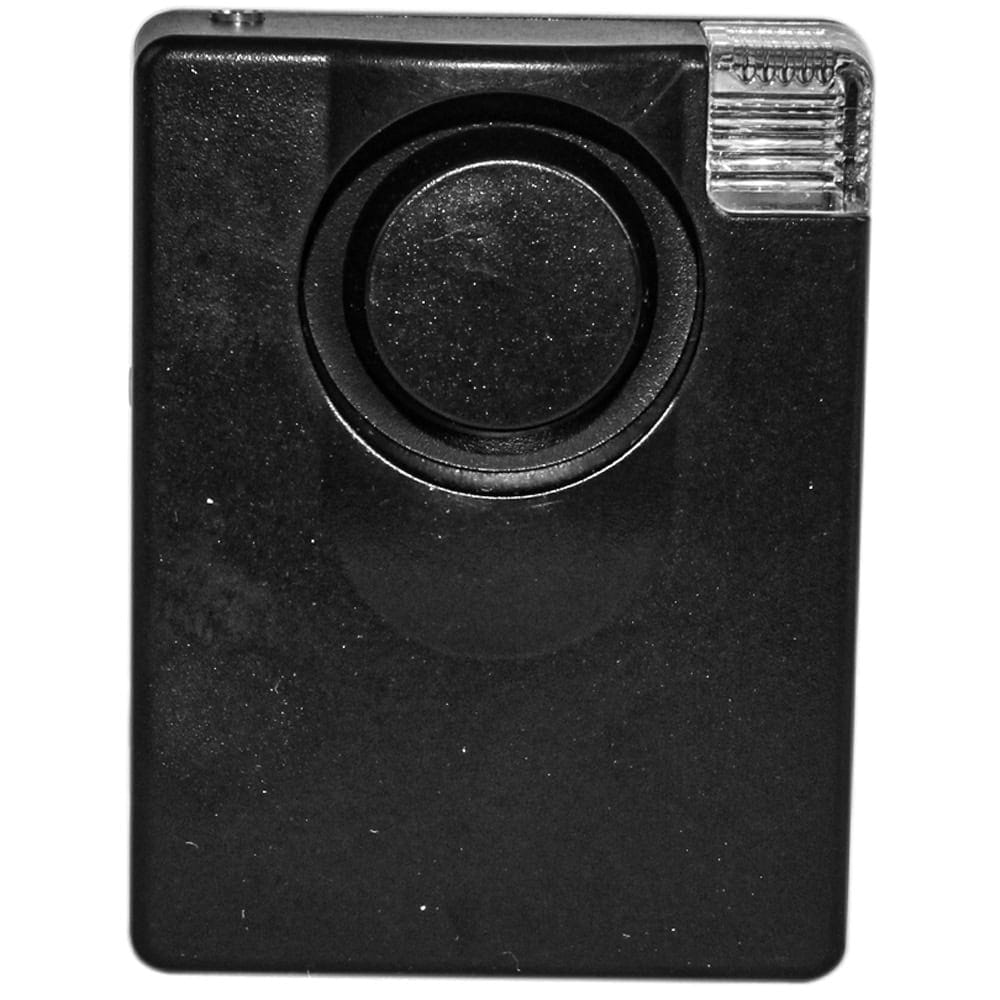


Volume above everything else. A 120dB siren is audible from over 300 feet away in open air — roughly the distance across a typical residential lot. The alarms on this page hit 120–130dB, which is the threshold where the sound becomes physically uncomfortable and genuinely hard to ignore. Anything under 100dB is background noise in a neighborhood with traffic.
One-step activation. The critical design feature for an elderly user isn’t how loud the alarm is — it’s how fast they can set it off under stress. Pull-pin designs like the Keychain Personal Alarm 130dB and the Mini Personal Alarm 120dB require exactly one action: yank the pin. There’s no button sequence, no switch to flip first, no cover to remove. When someone is panicked or on the ground, that matters more than any spec on the box.
Wearable or clip-on carry. An alarm in a purse or nightstand drawer is almost useless in a fall scenario. Look for devices with belt clips, keychain rings, or wrist attachment options so the alarm stays on the person — not nearby. The 3-in-1 Personal Alarm includes a safety clip built in for this reason.
Secondary function as a deterrent. Several of these alarms include an LED flashlight. That’s not just a bonus feature — it’s genuinely useful for an elderly person navigating a dark hallway at night, which is exactly when falls are most common. The 3-in-1 Personal Alarm puts out 50 lumens, enough to light a stairway clearly.
Dual-purpose for home security. The 2-in-1 Personal and Burglar Alarm does something the others don’t: it also mounts to a door or window as an entry alert. For an elderly person living alone, that’s two layers of protection from one affordable device — personal panic coverage when they’re moving around, and perimeter coverage when they’re sleeping.
Match the device to their daily routine. If your family member leaves the house regularly — for walks, grocery trips, medical appointments — the Keychain Personal Alarm 130dB makes the most sense because it attaches directly to their keys and goes everywhere they do. If they’re mostly home, the 2-in-1 alarm gives them panic coverage plus door security in one device they don’t have to remember to carry.
Test it with them, not just for them. Sit down and practice the activation together before you leave. Pull-pin alarms are intuitive, but someone who has never used one may hesitate under stress. Thirty seconds of practice — literally just pulling the pin and reinserting it — makes a meaningful difference in response speed when it counts. Some pins have small bead chains that can be looped around a wrist or finger for even faster access.
Battery maintenance matters. These are battery-powered devices, not rechargeable. Set a phone reminder to check and replace batteries every six months — or pick a date that’s easy to remember, like the start of daylight saving time. A dead alarm is worse than no alarm because it creates false confidence. Put fresh batteries in before you give the device to your family member.
Placement for the home-based alarm. If you’re using the 2-in-1 alarm as a door sensor, mount it on the primary entry door — most break-ins start there, and it’s also the door most likely to be opened unexpectedly. Position the personal panic portion somewhere accessible at night, like the nightstand or attached to a bedside rail, not stored in a drawer.
A: For practical outdoor use, you want at least 120dB — that’s the lower end of what’s considered physically startling, equivalent to a loud rock concert heard up close. The alarms on this page reach 120–130dB, which carries clearly across a residential street or through walls inside a home. Anything under 100dB may not be audible through closed windows or to neighbors who have background noise in their own space.
A: Personal alarms have no known legal restrictions in the United States — they emit sound, not any chemical or electrical charge, so they’re not regulated the way pepper spray or stun guns are. That said, laws around personal safety devices vary by state and situation, and it’s always worth checking. See our Laws & Restrictions page at https://varietyproducts.com/law-and-restrictions/ for details relevant to your location.
A: Pull-pin alarms are actually one of the better options for people with limited hand strength precisely because pulling doesn’t require fine motor control or a firm squeeze — it’s a gross motor motion, which remains available even when grip strength declines. The pin lanyard can also be looped over a wrist or finger, so the alarm activates simply by the person moving their arm away from the device. Test the specific model beforehand to confirm the pull resistance works for your family member.
A: Medical alert systems like Life Alert connect to a monitoring center that can dispatch emergency services — they’re a full communication system. A personal alarm like the Keychain Personal Alarm 130dB or the 3-in-1 Personal Alarm is a standalone siren: it makes noise to attract nearby people, but it doesn’t contact anyone automatically. Personal alarms are significantly less expensive, require no subscription, and work without cellular or Wi-Fi connectivity, which makes them a solid complement to — or a practical alternative for — people who resist wearing medical alert devices. If your family member needs guaranteed emergency dispatch, a monitored system is worth the cost. If the goal is drawing attention from neighbors or people nearby, a 130dB alarm does that job well.
A: On their person, not nearby. The most common failure mode for personal alarms is that the person couldn’t reach it when they needed it — it was in a bag, a drawer, or another room. For daily carry, attach the alarm to a keychain, belt loop, or jacket zipper pull. At home, the nightstand is the right place for overnight use, particularly if falls are a concern in the bathroom or hallway at night. The 2-in-1 Personal and Burglar Alarm gives a useful middle ground — it works as a mounted door alarm when stationary and can be removed and carried as a panic alarm when moving through the house.
We're happy to help you find the right fit — reach out through our contact page and we'll point you toward the option that makes the most sense for their situation.
Shop All Personal AlarmsEXCLUSIVE OFFER
Every order – not just your first!
Unlock Your Discount Instantly
Enter your email below and your personal 15% discount code appears right here – no need to check your inbox.
🔒 We respect your privacy. Unsubscribe anytime.
YOU’RE IN!
Use this code on every order
🎉
Here’s Your Code!
Use it now an on every future order.
YOUR DISCOUNT CODE
We also sent this code to your email for safekeeping.